

Region: York, Yorkshire, England
The York Minster Circular Walk is an atmospheric five-kilometre journey through one of England’s most remarkable historic cities, linking Gothic architecture, medieval streets, Roman remains, ancient gateways, riverside paths and elevated sections of York’s famous city walls.
Beginning outside York Minster, the route immediately places you at the heart of the old city. The cathedral has been a centre of Christian worship since the seventh century, while the present building developed over hundreds of years and contains one of the world’s most important collections of medieval stained glass.
From the Minster, the walk follows High Petergate to Bootham Bar, one of the principal historic gateways into York. A climb onto the walls then provides a completely different view of the city, with the towers of the Minster rising above rooftops, gardens and narrow streets.
After descending near Monk Bar, the route enters the dense medieval centre and reaches the Shambles. Its timber-framed buildings, overhanging upper storeys and narrow cobbled street preserve much of the atmosphere of old York, while nearby Shambles Market provides an easy place to stop for food or browse local stalls.
The walk then continues towards Clifford’s Tower, the principal surviving structure of York Castle. The tower occupies a commanding mound above the surrounding streets, although its history includes one of the darkest episodes in medieval York: the persecution and deaths of members of the city’s Jewish community in 1190.
The final part of the route reaches the River Ouse, crosses Lendal Bridge and enters York Museum Gardens. Here, landscaped grounds contain the Yorkshire Museum, the Roman Multangular Tower, the ruins of St Mary’s Abbey and fragments from several periods of York’s long history. The gardens are free to enter during their published opening hours.
The basic circuit can be walked in around 1.5 to 2 hours, but York strongly rewards a slower visit. Allowing three or four hours provides time to enjoy the walls, browse the Shambles, stop beside the river and explore Museum Gardens. Entering York Minster, Clifford’s Tower or the Yorkshire Museum could easily turn the walk into a full-day itinerary.
This is an ideal route for history lovers, photographers, families and first-time visitors. Readers who enjoy York’s medieval character could continue to the Bath City Centre Circular Walk for Roman and Georgian heritage, the Oxford City Centre Circular Walk for historic colleges and cobbled lanes, or the Cambridge City Centre Circular Walk for riverside university scenery. Your Whitby to Robin Hood’s Bay Coastal Walk and Roseberry Topping Circular Walk are also strong internal links for readers planning a longer visit to Yorkshire
Looking for more city walks in England? Try my London Tube Trekking Walks, Oxford City Walk, Bath City Walk or Cambridge City Walk.
Below are a three ideas for trips and tours available in York, GetYourGuide offer great discounts and availability + Many more!
Looking for Cheap Flights? Try the Skyscanner Flight Checker Below.
This is how I find my ‘Flight Tickets‘, Leeds Bradford Airport is the nearest option. York is easily reached by train in under 2 hours from London, and just 25 minutes from Leeds.
Getting There: Directions, GPX and App Link
- Start point: York Minster (main entrance)
- Google Maps: York Minster
- GPX: Download the GPX file here for use on your GPS device or watch
- You can also follow this route on my Outdooractive and Komoot
- Avoid the early start – find accommodation near York
Hike Profile
- Distance: 3 miles / 5 km (circular)
- Duration: 1.5 – 2 hours (or longer with sightseeing)
- Elevation: Mostly flat at street level, with steep staircases and elevated sections on York’s City Walls.
- Difficulty: Easy overall, but the City Walls involve steep stairs, narrow elevated paths and uneven historic surfaces.
- Route conditions: City streets, pedestrianised zones, and sections on the historic walls

Sim Local can reduce or even eliminate your roaming fees. Click www.simlocal.com/ + 10% Discount Using – ‘WELSHMAN’
Hike Description
Begin the York Minster Circular Walk in the open space beside York Minster, close to the main visitor entrance on Deangate.
This is the historic and visual centre of York. The vast Gothic cathedral towers above the surrounding streets and can be seen repeatedly throughout the walk, particularly from the elevated city walls.
York Minster is formally the Cathedral and Metropolitical Church of St Peter in York. Christianity has been associated with the site since the early medieval period, while a Norman cathedral was constructed here between 1080 and 1100. Parts of that building survive beneath the current Minster and can be seen in the Undercroft.
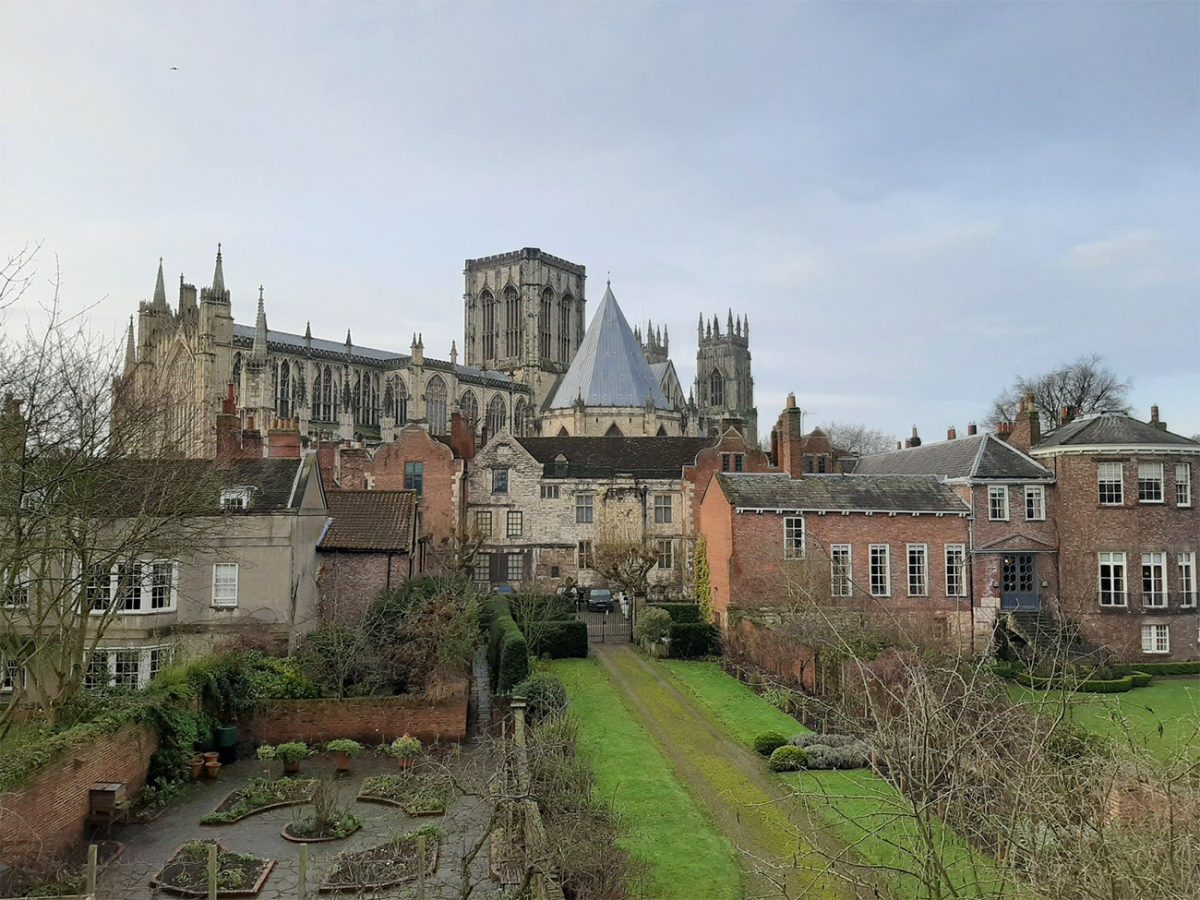
The exterior can be appreciated freely from the surrounding streets, but general sightseeing admission to the cathedral requires a ticket. Opening times vary according to services, ceremonies and other events because York Minster remains an active place of worship.
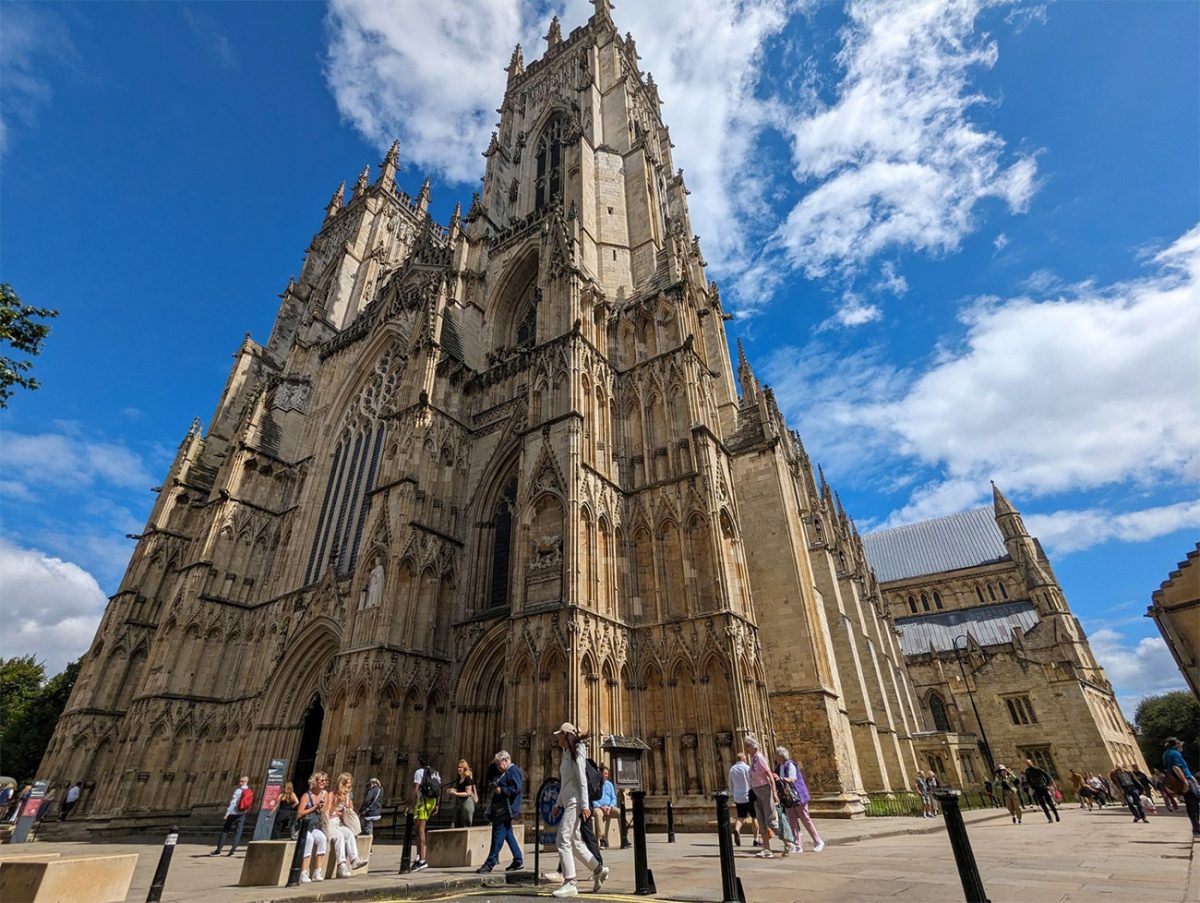
Take time to study the western façade, with its twin towers, intricate stone carving and enormous windows. The Minster contains an exceptional collection of medieval stained glass, including the Great East Window.
Leave the Minster precinct and walk along High Petergate.
This historic street follows part of the line of the Roman road that led towards the fortress gateway. Today it contains cafés, shops, pubs and buildings from several different periods.
Looking back along the street, the Minster rises dramatically above the surrounding façades. This is one of the best opportunities to photograph the cathedral within the context of the old city.
Continue towards Bootham Bar.
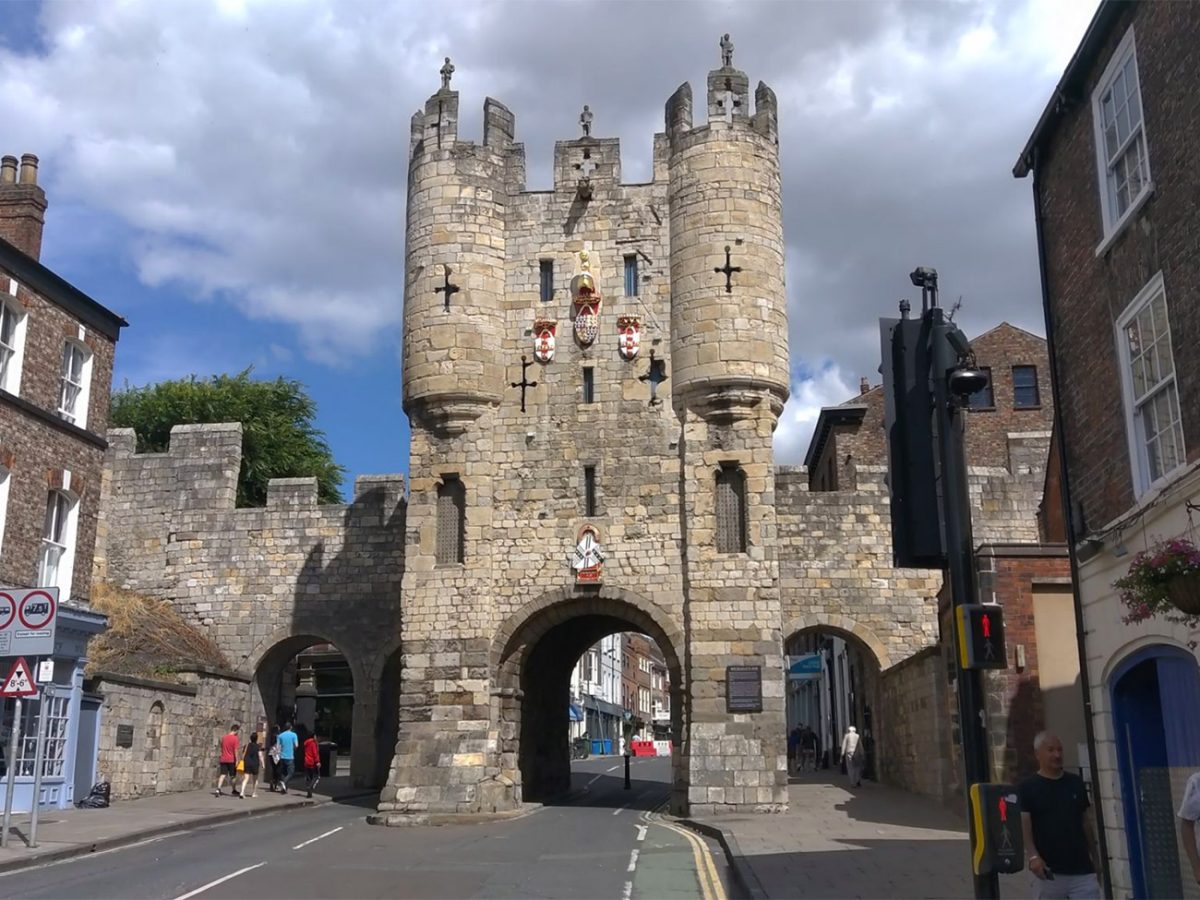
In York, the principal fortified gateways are known as “bars”, while many smaller streets are called “gates”, derived from the Old Norse word for street.
Bootham Bar occupies the site of a gateway into the Roman fortress, although most of the visible structure is medieval and later. It is one of the four main historic gateways associated with York’s walls.
Use the staircase to climb onto the wall walkway.
The steps can be steep and may be slippery in wet or icy weather. There is no step-free access to this section, and anyone unable or unwilling to use the walls can follow the surrounding streets towards Monk Bar instead.
Once on the wall, turn in the direction indicated by your GPX route and begin the elevated section towards Monk Bar.
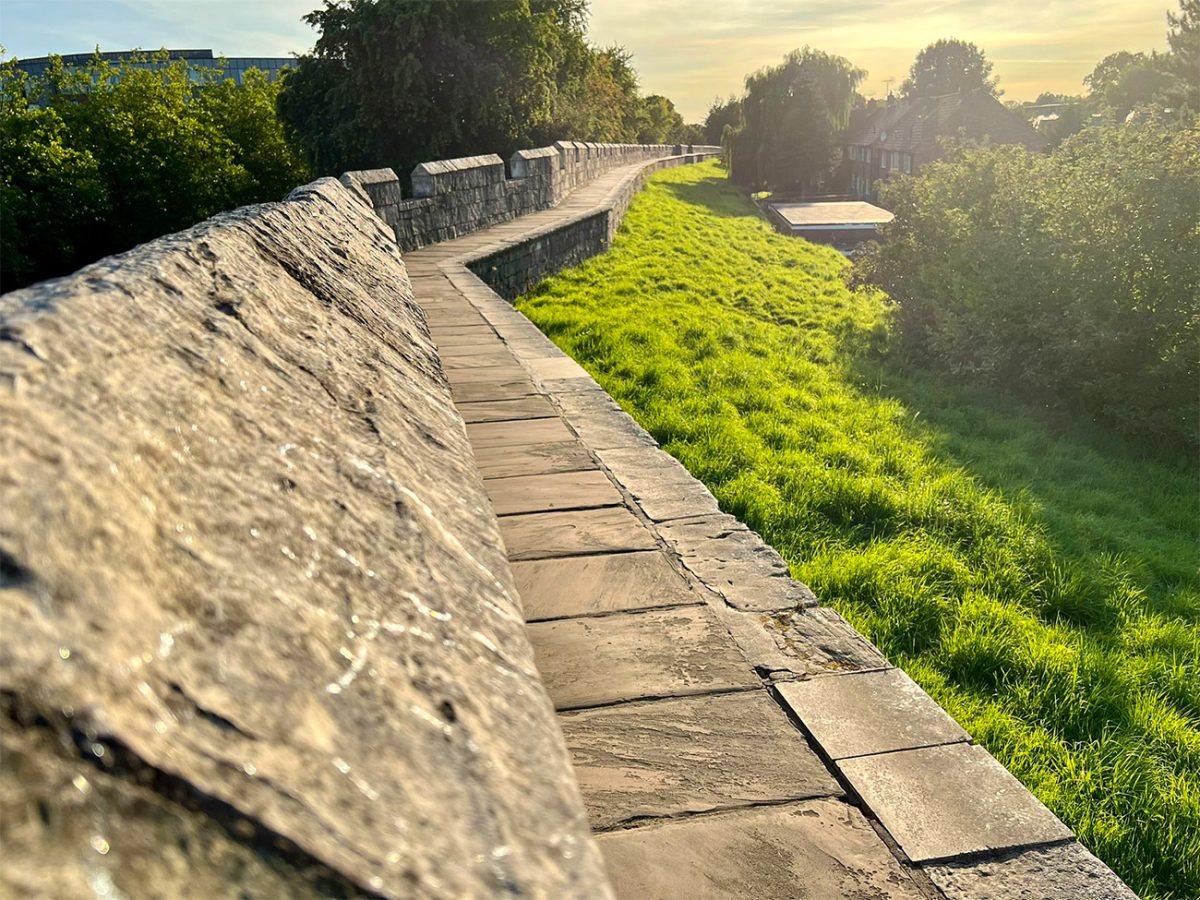
York’s surviving walls preserve evidence from Roman, medieval and later periods. The medieval stone circuit was developed mainly during the thirteenth and fourteenth centuries, although it follows older defensive lines in several places.
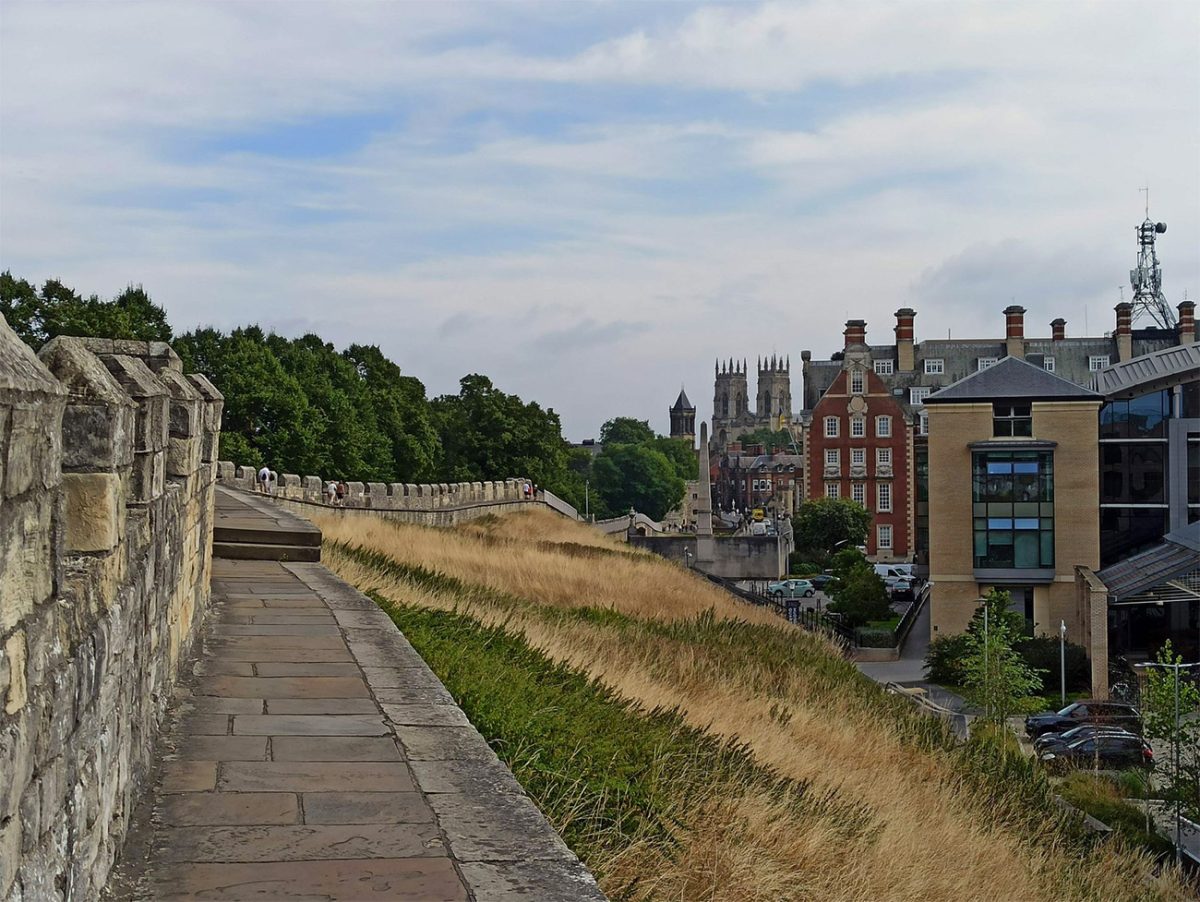
The wall walkway provides excellent views over gardens, rooftops and the streets outside the historic centre. York Minster remains the dominant feature, appearing above the buildings from several angles.
The walls are free to use, but access is controlled for safety. Sections may be closed during strong winds, frost, ice, flooding or conservation work, so check the City of York Council’s current information before relying on this part of the route.
There are unguarded drops, narrow stretches and numerous changes in level. Children should remain closely supervised, and the walkway should not be treated like an ordinary pavement.
Pet dogs are not permitted on the walls, except assistance dogs. Walkers with dogs will need to remain at street level and rejoin the route near Monk Bar.
Continue along the wall towards Monk Bar.
Monk Bar is one of the largest and most impressive of York’s medieval gateways. Its tall structure originally helped control access into the city and contains defensive features including arrow slits and a portcullis.
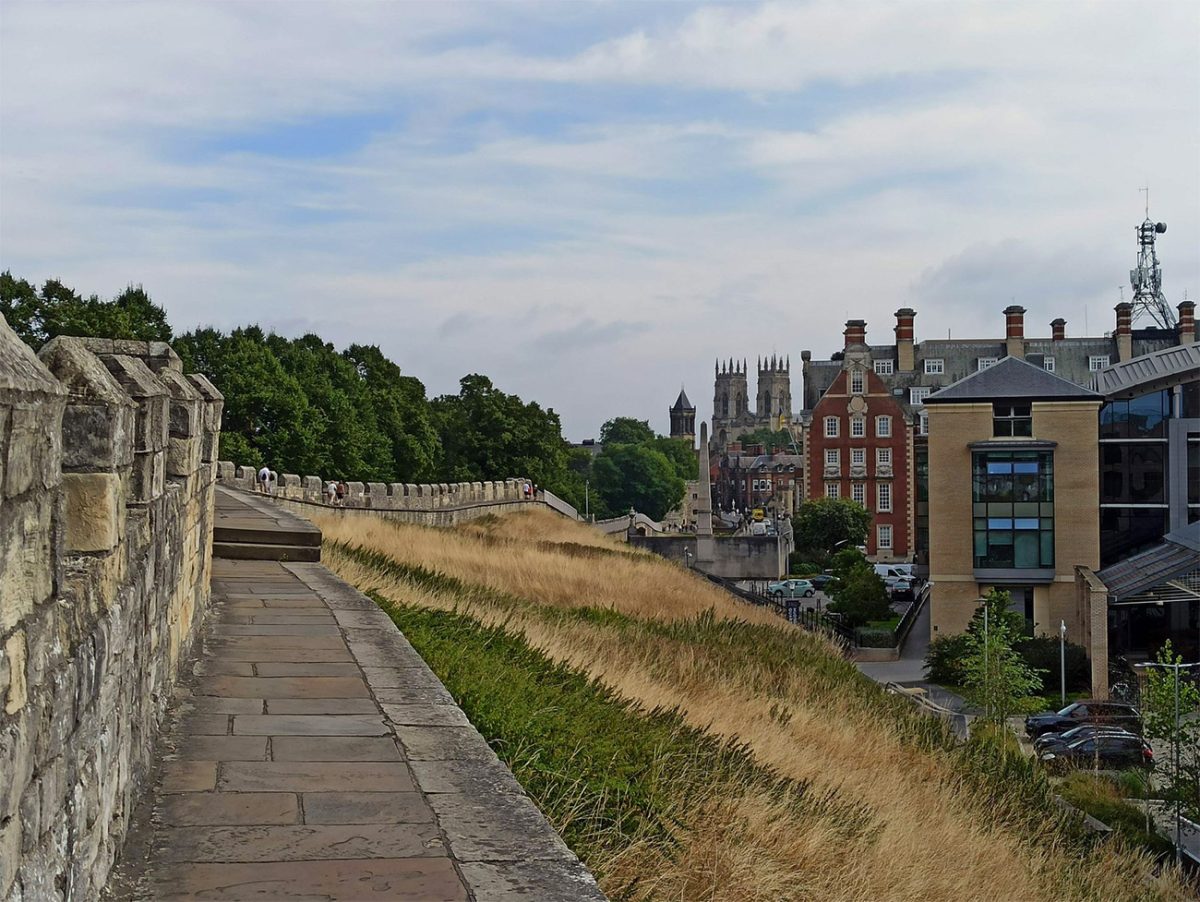
Descend carefully from the walls.
From Monk Bar, follow the GPX route through the streets towards the Shambles district. The transition from the open wall walkway to the enclosed medieval centre is one of the most interesting changes in character on the walk.
Pass through streets lined with independent shops, cafés and historic buildings. York’s centre can become extremely crowded during summer weekends, school holidays and the Christmas Market period, so allow extra time.
Approach The Shambles, one of the most famous streets in York.
The Shambles is known for its narrow route, cobbled surface and buildings whose upper floors project over the street. It is widely described as one of Europe’s best-preserved medieval shopping streets.
The street was historically associated with butchers. Some buildings retain external shelves that recall the period when meat was displayed and sold from the shop fronts.
Although the Shambles is often connected with the fictional Diagon Alley, it should not be described as a confirmed Harry Potter filming location. It is more accurate to say that its crooked appearance is frequently compared with, or said to have inspired, the magical shopping street.
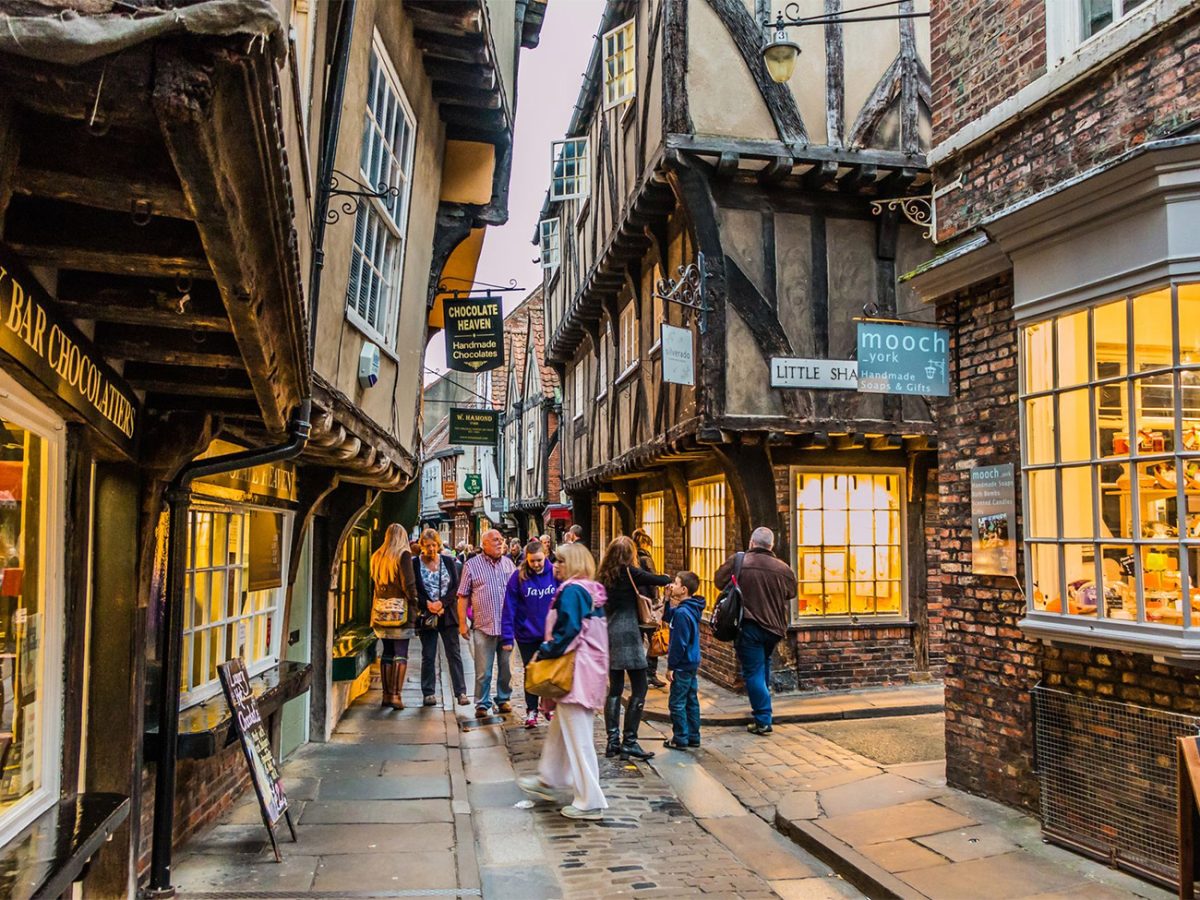
Take care on the cobbles, particularly when wet. The street is narrow and can become congested, making early morning the best time for photography.
Continue into Shambles Market.
The market area contains stalls selling food, gifts, crafts, clothing and local produce. The adjoining food court provides a convenient place for lunch or a short break.
Opening arrangements vary between traders, so not every stall will necessarily be operating throughout the day.
Leave the market and follow the route south through the central shopping streets.
Depending on the exact GPX line, this part of the walk may pass close to Parliament Street, Coppergate or the JORVIK Viking Centre.
York was known as Eboracum under the Romans and later became the Viking settlement of Jórvík. Archaeological remains found around Coppergate have helped reveal the layout, crafts and daily life of the Viking city.
Continue towards the former York Castle complex and Clifford’s Tower.
The stone tower stands on a steep grassy mound above Tower Street. It is the largest surviving part of York Castle, which once served as a major administrative and defensive centre for northern England.
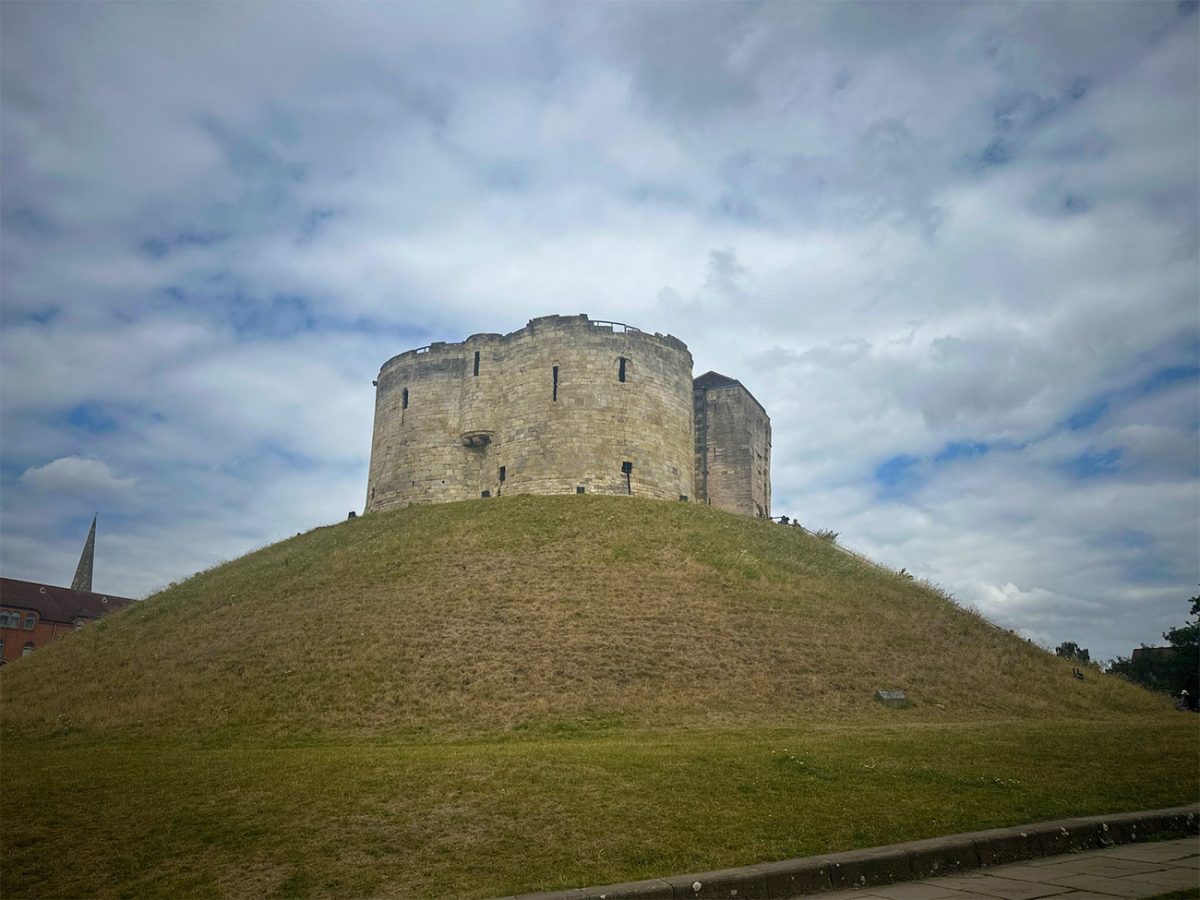
William the Conqueror established the first castle here during the eleventh century. The original keep was made mainly of timber.
The site must also be understood as a place of tragedy. In March 1190, members of York’s Jewish community sought refuge within the timber tower while being threatened by an armed mob. Many died by suicide or were murdered, and the tower was burned. A memorial plaque at the base of the mound commemorates the victims.
The present stone structure was constructed during the thirteenth century and later served a variety of administrative, treasury and prison functions.
Walking around the base of the mound is free. Entry into the tower requires a ticket.
Visitors who enter must climb approximately 55 steps to reach the keep, followed by further stairs inside and towards the roof deck. There is no lift, and the attraction is not accessible to wheelchair users.
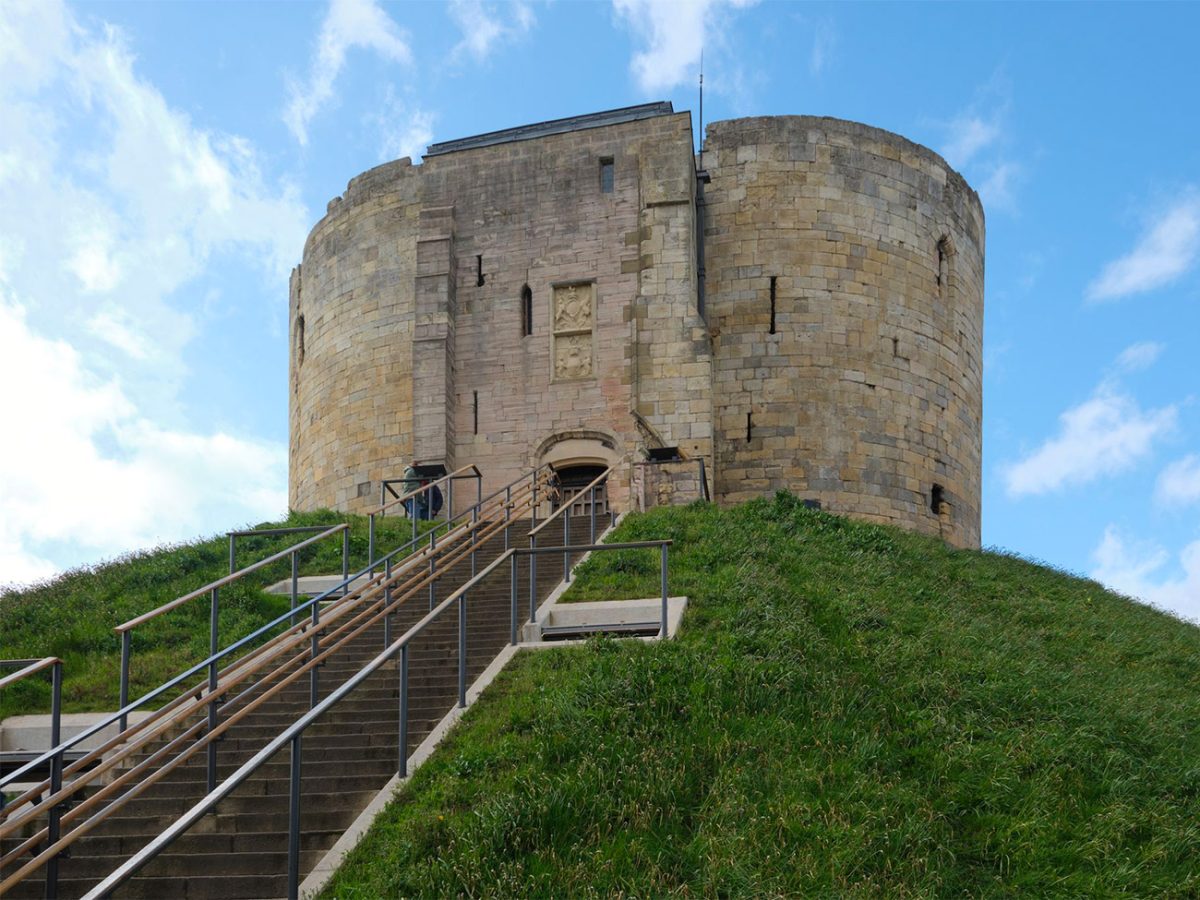
The elevated roof provides broad views over York, but allow additional time if you intend to visit.
From Clifford’s Tower, follow the GPX route towards the River Ouse.
This section passes through a mixture of busy roads, pedestrian streets and historic buildings. Use marked crossings and remain aware of traffic.
Reach the riverside and continue along the public path.
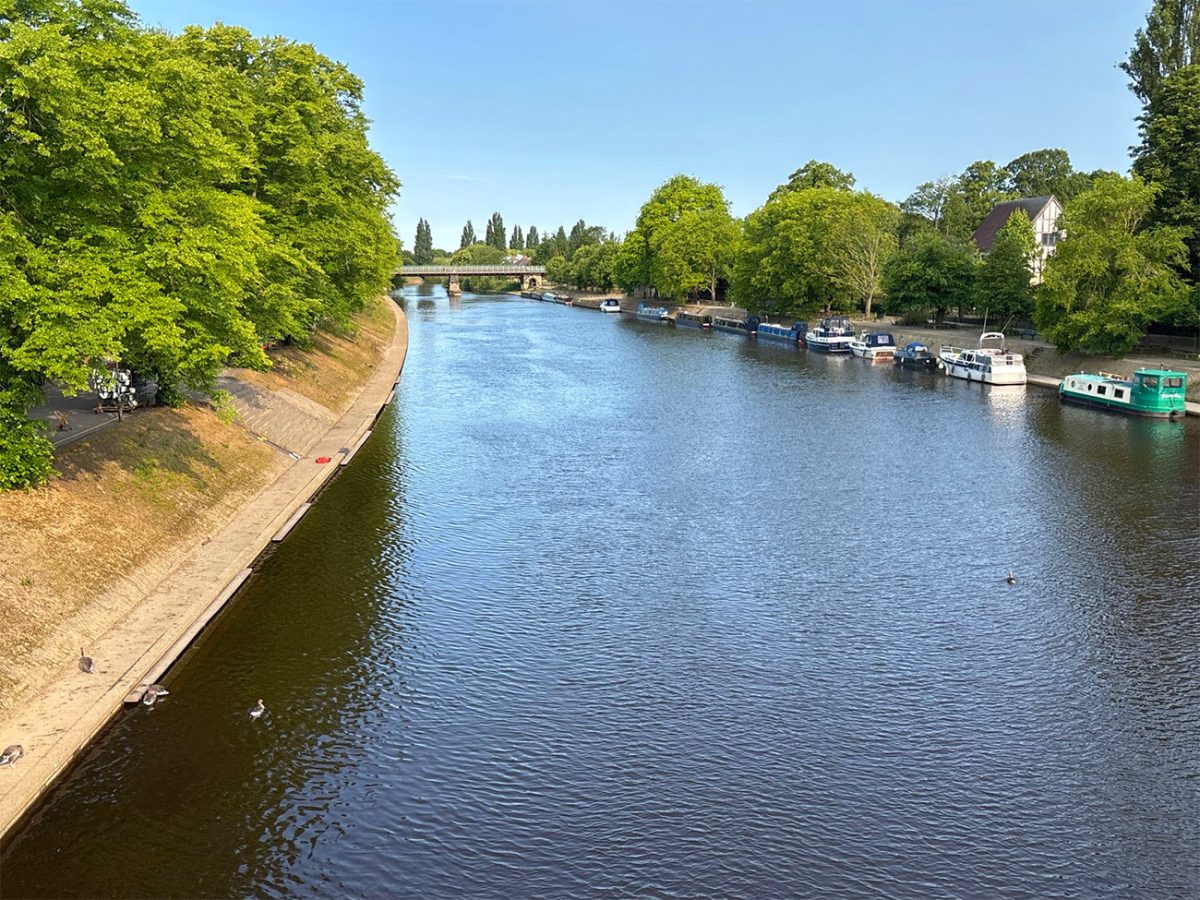
The Ouse has played a central role in York’s development, carrying trade into and through the city. Its waters also create one of York’s principal modern hazards because riverside paths can flood after prolonged rain.
When river levels are high, low-lying paths may be closed or impassable. Follow local signs and use the parallel streets if necessary.
The riverside gives the walk a quieter character after the crowded Shambles and castle area. Boats, bridges and waterside buildings provide a contrast with the enclosed medieval lanes.
Continue towards Lendal Bridge.
Lendal Bridge crosses the Ouse close to York railway station and the entrance to Museum Gardens. From the bridge, there are attractive views along the river and towards the city centre.
Cross the river and enter York Museum Gardens.
The gardens occupy approximately ten acres beside the Ouse and contain landscaped lawns, mature trees, botanical collections and archaeological remains.
Entry to the gardens is free, although they are enclosed and operate published opening hours rather than remaining accessible continuously.
One of the most important structures is the Multangular Tower. It forms part of the Roman fortress defences and is regarded as York’s best surviving standing Roman structure.
The lower stonework dates from the Roman period, while the upper sections show later medieval rebuilding. This makes the tower an unusually clear example of different phases of York’s defences occupying the same structure.
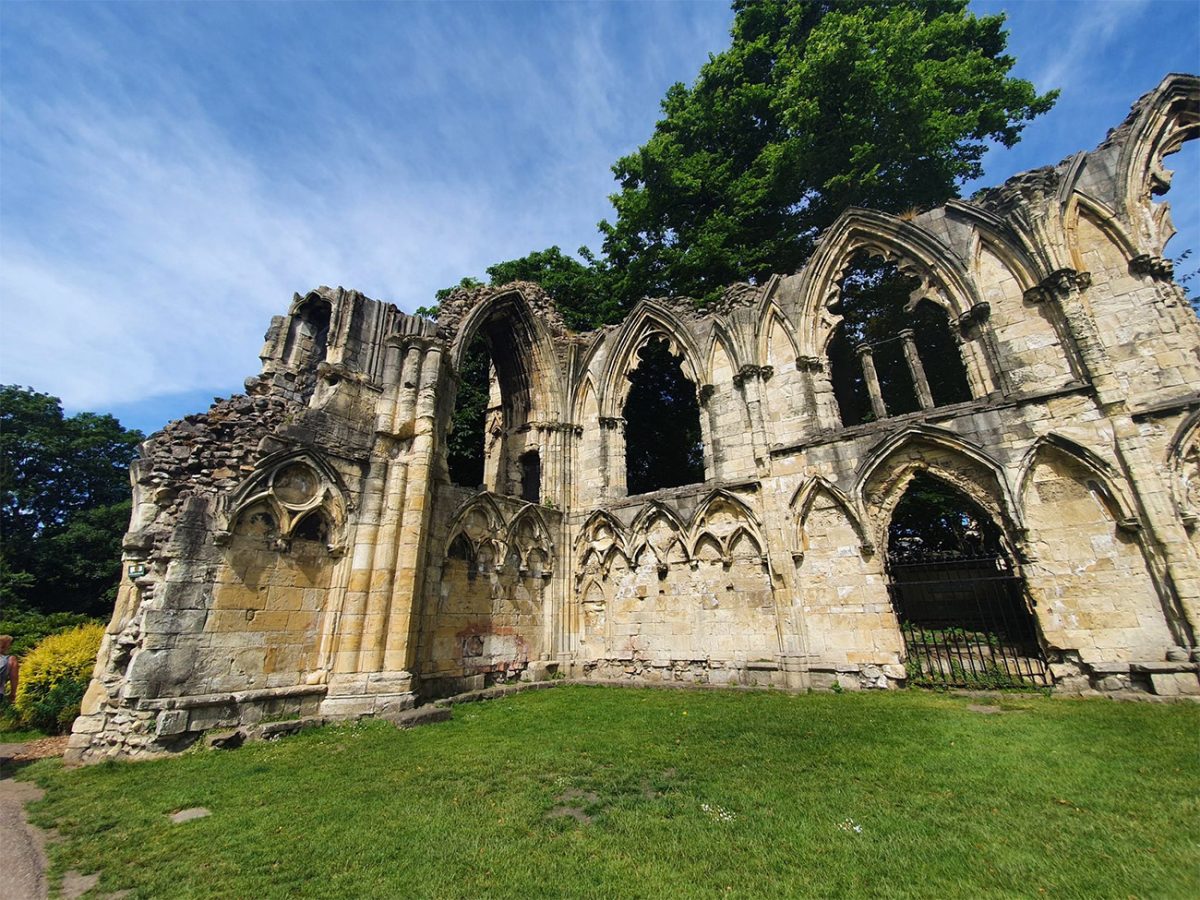
Continue through the gardens towards the ruins of St Mary’s Abbey.
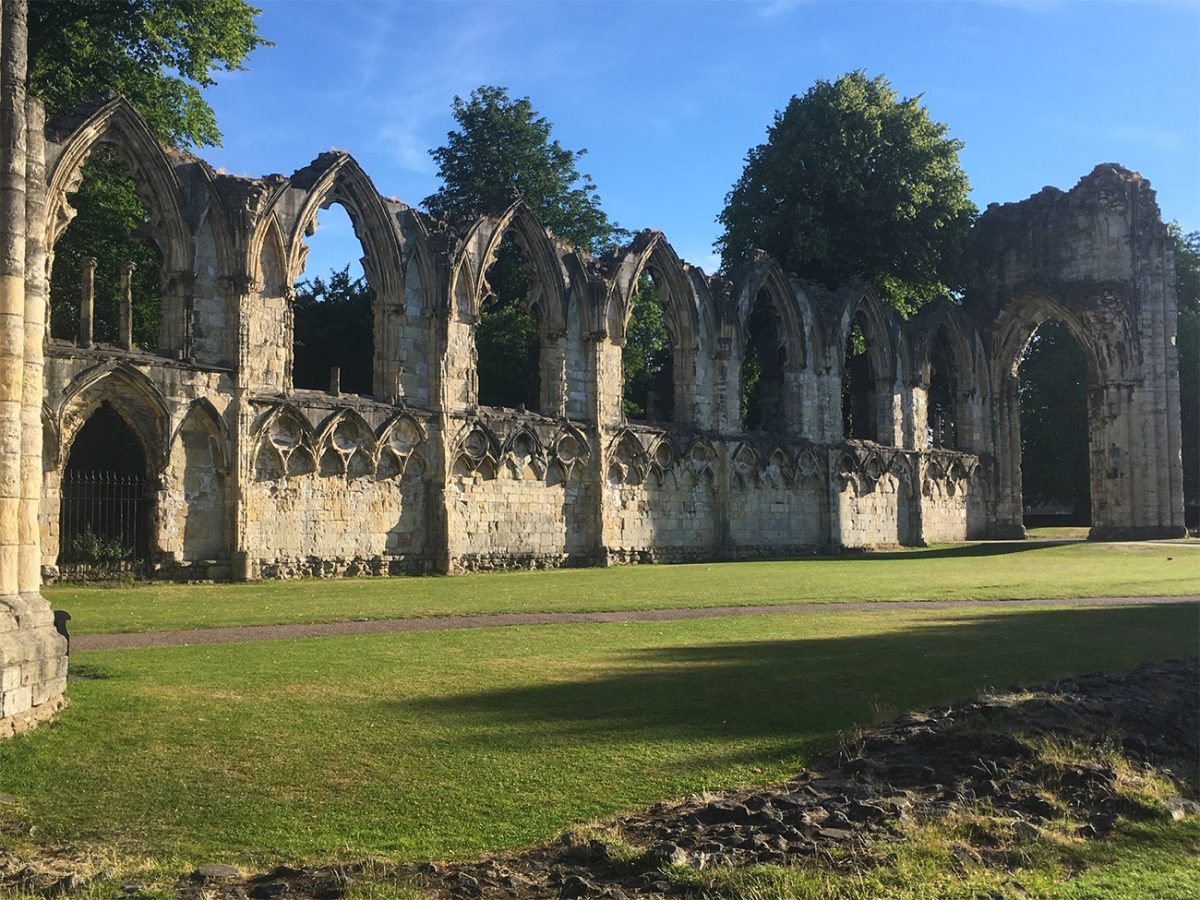
The abbey was founded in 1088 and became one of the richest and most influential Benedictine monasteries in medieval England. It was dissolved during Henry VIII’s Reformation, leaving the substantial ruins seen today.
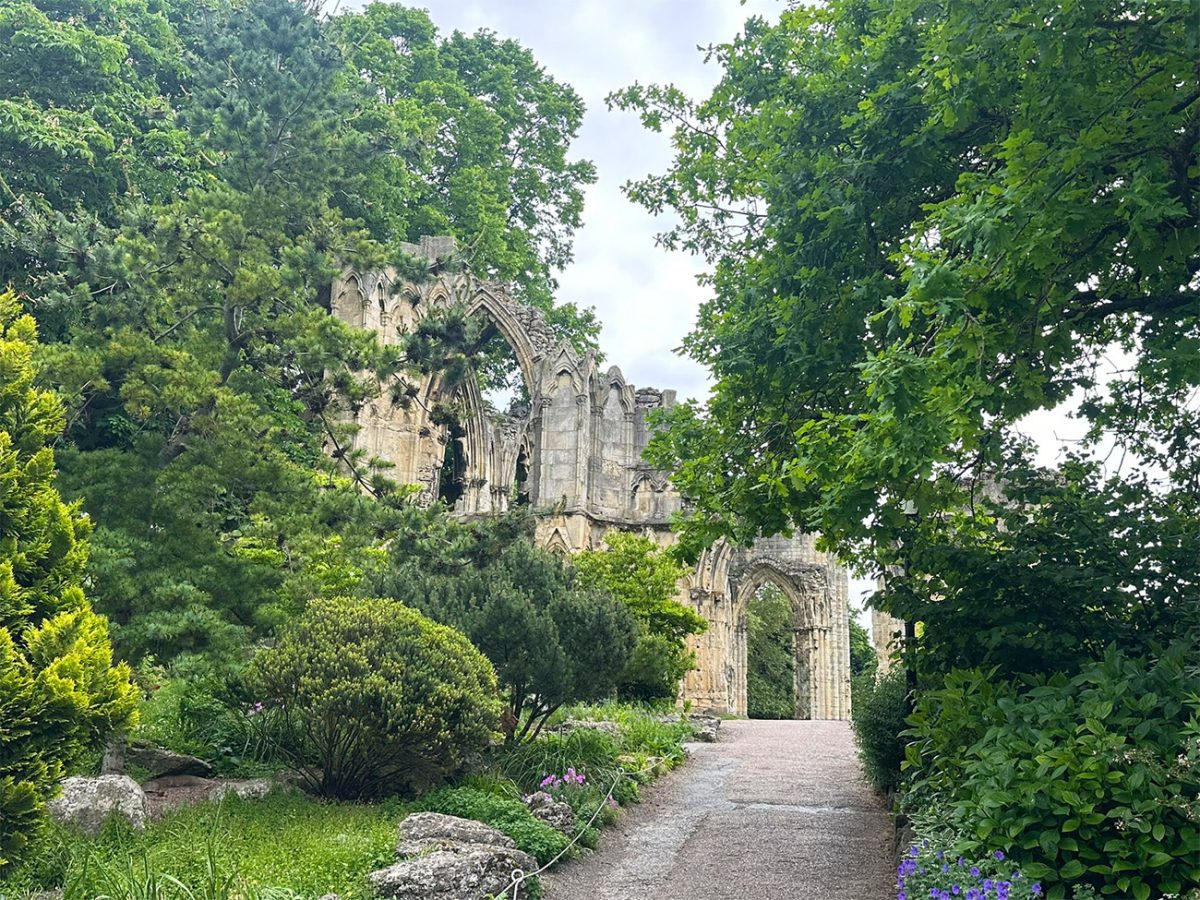
The surviving walls, arches and foundations create one of the most atmospheric areas of the gardens.
Nearby stands the Yorkshire Museum, which contains archaeological, geological and natural-history collections. Entry requires a ticket, but the exterior and surrounding ruins can be enjoyed as part of the walk.
The gardens also contain remains associated with St Leonard’s Hospital and other phases of York’s history.
Follow the paths towards the main exit near Museum Street.
This section is largely surfaced and level, although individual paths, lawns and ruins may include uneven areas.
Leave Museum Gardens and follow Museum Street back towards the Minster.
You may pass close to the Yorkshire Museum, Exhibition Square and the York Art Gallery before returning through Bootham Bar or the surrounding streets.
The Minster gradually returns into view above the rooftops, providing a clear landmark for the final part of the circuit.
Return to York Minster to complete the five-kilometre walk.
The route takes approximately 1.5 to 2 hours if walked without extended stops. A more realistic sightseeing time is around 3–4 hours.
Adding York Minster, Clifford’s Tower, the Yorkshire Museum, JORVIK Viking Centre or a lengthy meal could turn the route into a complete day.
The walk is easy in terms of distance and elevation, but the terrain is varied. Expect paved streets, cobbles, steep staircases, elevated walls and potentially flooded riverside paths.
Comfortable trainers or walking shoes are advisable. Cobbles and old stone can become slippery after rain, while the wall steps require care.
The complete route is not wheelchair or pushchair accessible because of the City Walls. A step-free alternative can bypass the Bootham Bar-to-Monk Bar section using street-level pavements.
York railway station is around a 10- to 15-minute walk from the Minster, making train travel particularly convenient. City-centre driving and parking are generally less straightforward.
The route itself is free. Charges only apply to optional attractions, food and transport.
York Minster City Centre Walk FAQs
Can I walk York’s City Walls for free?
Is the York city walk suitable for children and older walkers?
Is the route wheelchair and pushchair accessible?
Are dogs allowed on the York City Walls?
Do I need a ticket to enter York Minster?
Can I visit Clifford’s Tower during the walk?
How long does the York circular walk take?
What happens if the riverside path is flooded?
Are there toilets and places to eat?
What should I bring?

Water-to-Go Named Best Water Bottle for Travel. Click www.watertogo.eu + 20% Discount Using – ‘WMW20’

AllTrails: Trail Guides & Maps for Hiking, Camping, and Running | AllTrails ‘Plus’ 30% OFF – Read my ‘Full Review‘ for more details.