

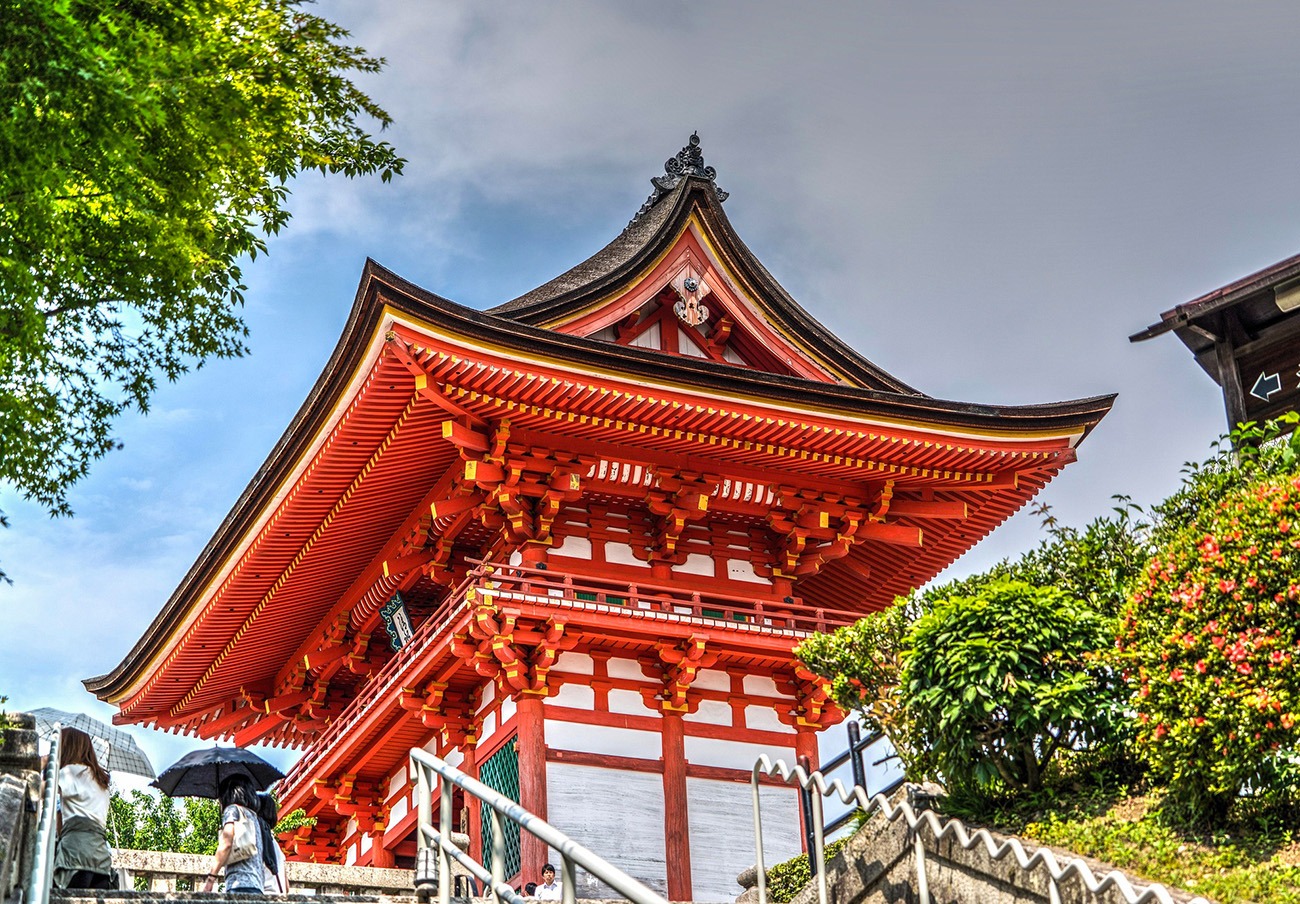
Region: Shikoku 88 Temple Pilgrimage — Tokushima Prefecture (Shikoku), Japan
Places To Stay: This starter section of the Shikoku 88 is gentle and cultural with lantern-lit temples, quiet lanes, rice fields, and friendly henro welcome. Base yourself in Tokushima City or Naruto for easy access to Temples 1–6; you’ll find simple guesthouses, business hotels by the station, and a few beachside resorts nearer Naruto.
The Shikoku 88 Temple Pilgrimage is one of Japan’s great long-distance journeys, linking 88 Buddhist temples associated with Kōbō Daishi (Kūkai) on a circuit of approximately 1,142 kilometres around the island of Shikoku. Walking the entire route can take 40–60 days, but you don’t need two months available to experience what being an ohenro pilgrim is all about.
This day walk covers the first six temples in Tokushima Prefecture, beginning at Ryōzenji — Temple 1 and the traditional starting point for many pilgrims — and finishing approximately 15.8 kilometres later at Anrakuji, Temple 6. Between them you walk quiet residential streets, rice fields, country lanes and short wooded sections, with relatively gentle terrain and the distinctive red and white henro signs guiding the way.
What makes the day special isn’t difficult hiking or huge mountain scenery; it’s the rhythm that develops between walking and arriving. Bowing at temple gates, incense drifting across the courtyards, visiting the Main Hall and Daishi Hall and watching the calligraphy being added to a nōkyōchō gradually makes this feel like something much more than a walk between six buildings. For anyone curious about the Shikoku pilgrimage but not ready to disappear around the island for six weeks, Temples 1–6 are a brilliant place to begin.
Looking for more trails in Japan? Visit my Japan Hiking Trails page.
Below are 3 ideas for day tours and transfers around Tokushima and Naruto. GetYourGuide offer good availability + see more.
For a wider choice of accommodation in the Tokushima, Booking.com has a huge variety to browse through.
Flying in? Quick Skyscanner Checker
Nearest major gateways: Tokushima Awaodori Airport (TKS), or fly into Osaka (KIX) and connect by bus/train.
Getting There: Directions, GPX and App Link
- Start/Finish: Temple 1: Ryozen-ji (Naruto) → Temple 6: Anraku-ji. Simple bus/train access from Tokushima City or Naruto.
- Google Maps: Ryozen-ji → Anraku-ji
- GPX: Download the GPX file here
- You can follow this route on my Outdooractive and Komoot profiles.
Hike Profile
- Route: Ryōzenji (Temple 1) → Anrakuji (Temple 6)
- Distance: approximately 15.8 km
- Walking time: approximately 4.5–5 hours moving
- Recommended duration: 6–8 hours including temple visits, worship, stamps and breaks
- Total ascent: approximately 210–220 m
- Difficulty: Easy–Moderate
- Route type: Linear
- Terrain: Mostly paved residential and rural lanes, agricultural roads and short wooded sections
- Navigation: Henro waymarkers/signage plus GPX backup
- Start: Ryōzenji, near JR Bandō Station Finish: Anrakuji, Kamiita
Stages & Distances (Typical Day Walk)
| Stop | From → To | Distance | Approx. time | Notes |
|---|---|---|---|---|
| Start | Temple 1 Ryōzenji → Temple 2 Gokurakuji | ~1.3 km | ~20 min | Gentle introduction through local streets |
| 2 | Gokurakuji → Temple 3 Konsenji | ~2.6 km | ~40 min | Residential lanes and farmland |
| 3 | Konsenji → Temple 4 Dainichiji | ~5.0 km | ~1 hr 30 min | Longest climbing section; increasingly rural |
| 4 | Dainichiji → Temple 5 Jizōji | ~1.8 km | ~30 min | Shorter, predominantly descending stage |
| Finish | Jizōji → Temple 6 Anrakuji | ~5.1 km | ~1 hr 20 min | Longer final section through rural Tokushima |
| Total | Ryōzenji → Anrakuji | ~15.8 km | ~4 hr 30 min moving | Allow 6–8 hours with temple visits |

Get a JR Rail Pass if you’re planning to roam widely. 7–21 day passes give ‘unlimited’ rides on most JR lines, including shinkansen.

Sim Local can reduce or even eliminate your roaming fees. Click www.simlocal.com/ + 10% Discount Using – ‘WELSHMAN’
Hike Description
Ryōzenji feels like the natural place to start because for generations this has been the beginning of the Shikoku pilgrimage for countless ohenro. Temple 1 sits close to Bandō Station, and around the entrance you’ll find the equipment that makes Shikoku pilgrims so recognisable: white hakui jackets, conical sugegasa hats, kongōzue wooden staffs, name slips, incense, sutra books and the nōkyōchō used to record visits to the temples.
You don’t need to buy or wear all of it. There isn’t a rule saying that somebody walking the pilgrimage has to dress as a traditional pilgrim, particularly if you’re simply walking Temples 1–6 as a day route. But understanding what the different items represent adds another layer to the experience.
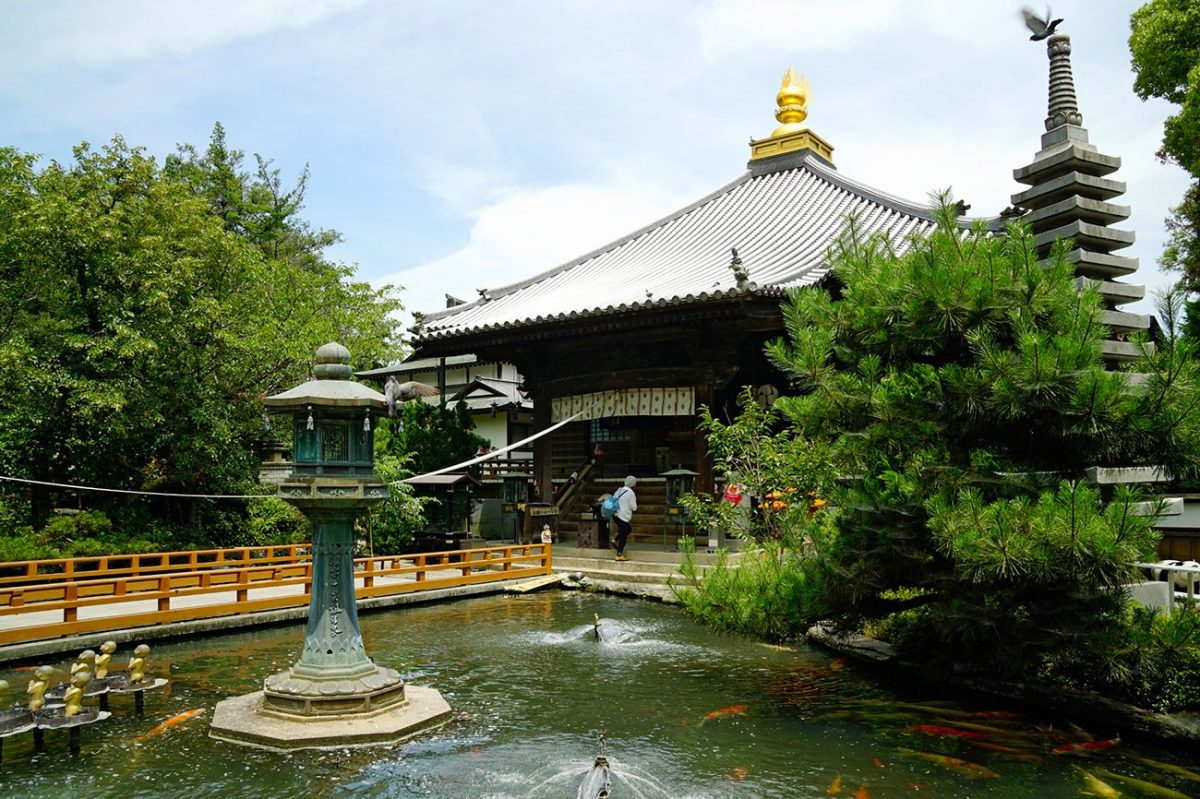
It is worth slowing down at Ryōzenji and learning the basic temple routine rather than treating the pilgrimage as a race to collect 88 stamps. Traditionally, a pilgrim bows when entering through the temple gate before proceeding to the Main Hall. Those following the full ritual may offer a candle and three sticks of incense, ring the hall bell once, leave an osamefuda name slip and offering, then recite the Heart Sutra or offer a quieter personal prayer.
Ryozen-ji is where you and many pilgrims start from. You’ll see white jackets, sedge hats, and wooden staffs for sale outside, these are symbols of the journey rather than souvenirs. Your first step is to go through the gate, ring the bell, light a stick of incense, and then collect your first stamp.
The Daishi Hall, dedicated to Kōbō Daishi, is visited as well. Only after worshipping do you normally visit the nōkyō office and present your nōkyōchō. The brush-written calligraphy and vermilion stamps aren’t simply tourist souvenirs; they form a record that you have worshipped at that temple.
Once you’re ready, leave Ryōzenji and the actual walking begins.

Temple 2, Gokurakuji, is only around 1.3 kilometres away, so the first stage is deliberately gentle. Residential lanes lead away from Temple 1 with hardly any climbing, giving you time to become familiar with the henro waymarkers before another temple gate appears surprisingly quickly.
Gokurakuji has a different character immediately. Its vermilion entrance, landscaped grounds and 44 stone steps leading towards the Main Hall make it feel very different from Ryōzenji. One of its best-known features is the Chōmeisugi, or Cedar of Longevity, associated with prayers for long life.
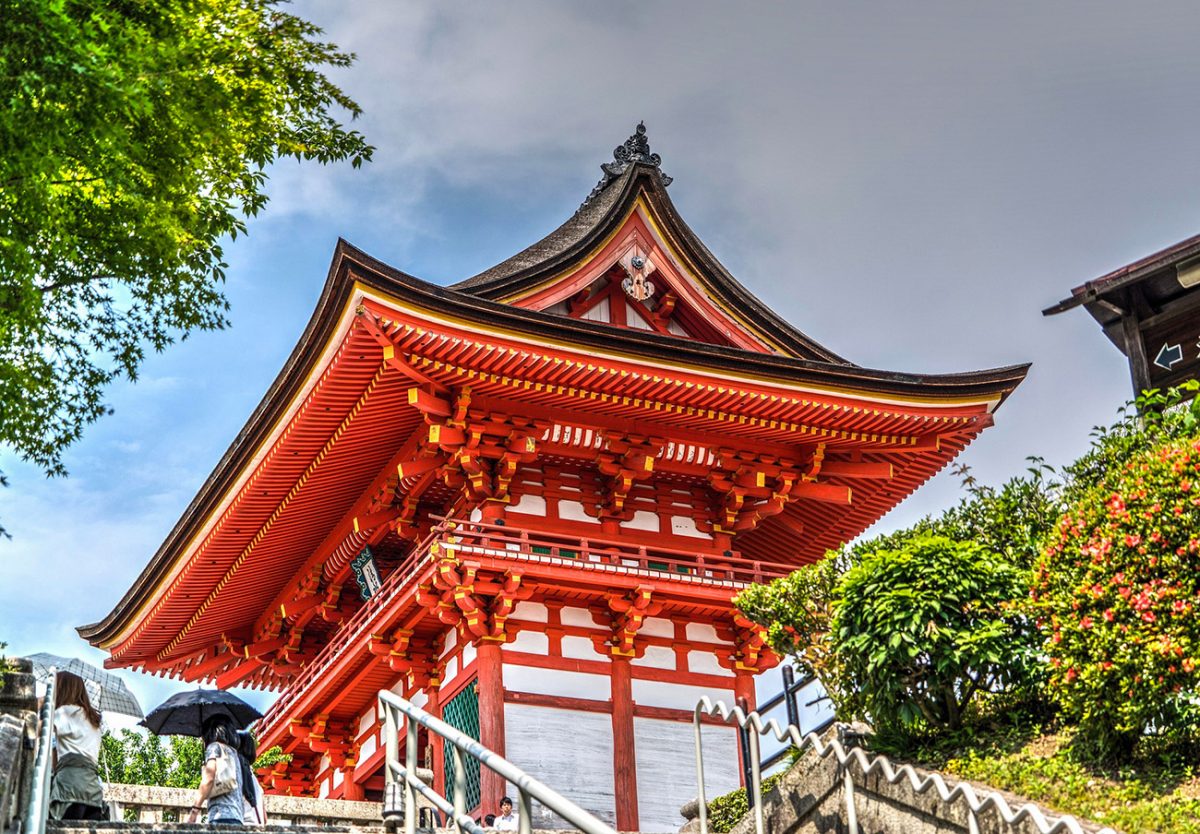
After completing the same temple routine, the route continues approximately 2.6 kilometres to Konsenji, Temple 3. This is where the day begins to feel less like visiting neighbouring temples and more like following a journey. The route passes through ordinary communities and agricultural land, and that mixture of sacred pilgrimage and everyday Shikoku life is one of the things I like about this section.
You aren’t walking through a preserved historical corridor. Cars pass, people tend gardens, trains cross the landscape and farmers work beside the route. Then another small henro sign or roadside Jizō statue reminds you that people have been making this journey for generations.
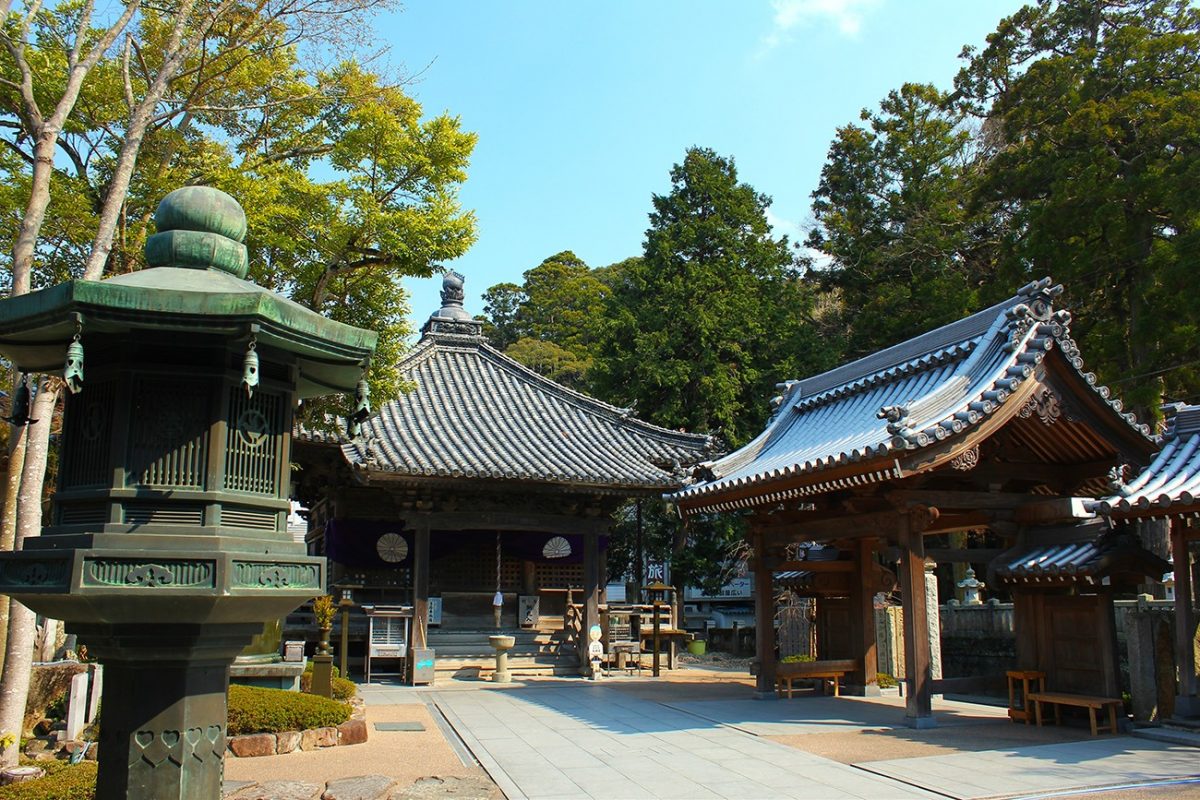
Konsenji is compact but atmospheric, with a striking vermilion gate and a two-storey pagoda. Its name translates roughly as the Temple of the Golden Spring, referring to a spring associated with Kōbō Daishi.
The journey from Temple 3 to Temple 4, Dainichiji, is the first substantial stage of the day at approximately five kilometres. This is one of the distances that the old page understated.
The landscape becomes increasingly rural as you head towards the hills. There is more climbing on this section than on the opening stages, around 130 metres of accumulated ascent, although nothing remotely technical. It remains predominantly lanes and straightforward walking.
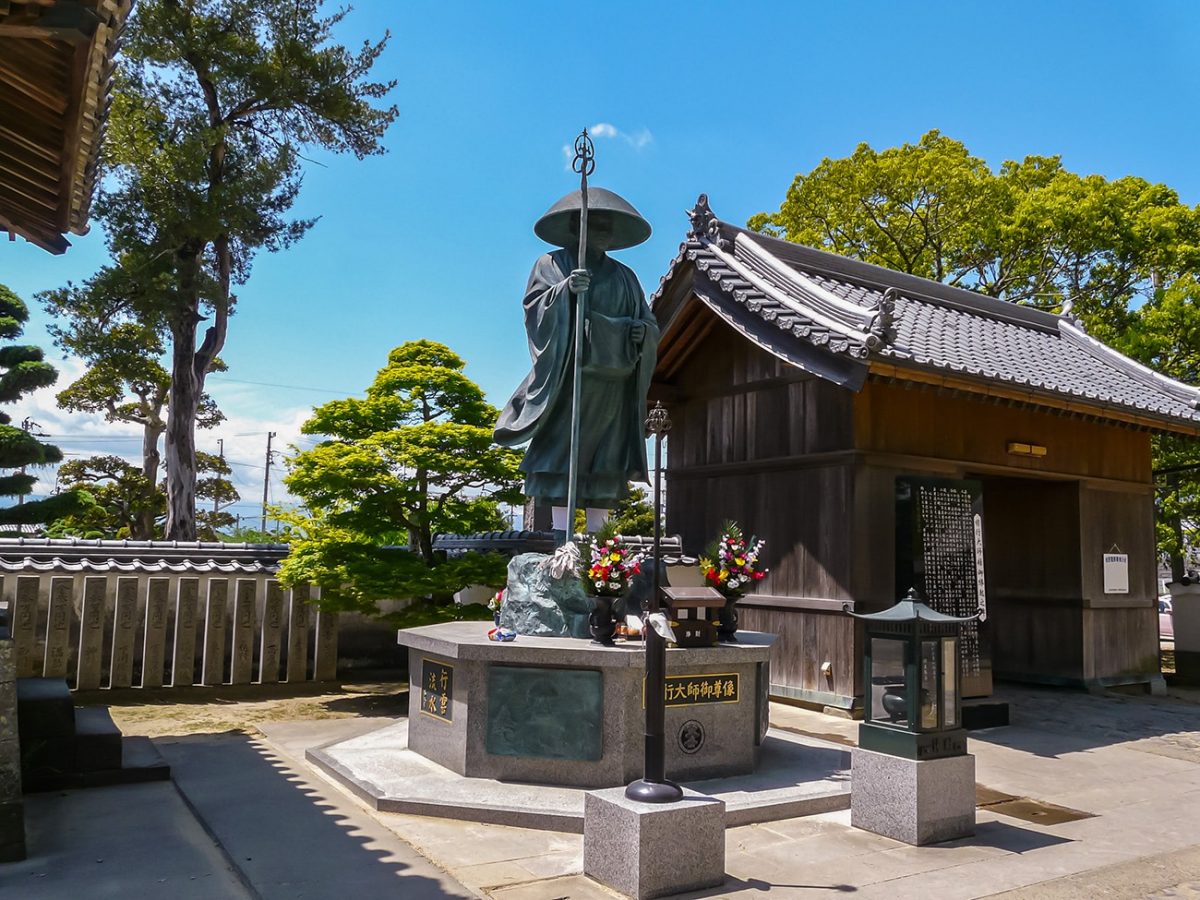
Dainichiji sits in a quieter setting close to the foot of the hills. After several kilometres of walking, reaching another temple begins to feel more significant than those first short hops from Ryōzenji. This is where you start to understand the rhythm long-distance pilgrims experience dozens of times: walk, arrive, bow, worship, pause and begin again.
Temple 5, Jizōji, is only around 1.8 kilometres further on, and this section is largely downhill. The temple grounds are known for their connection with Jizō Bosatsu, and nearby is the Gohyaku Rakan — the Five Hundred Arhats — where hundreds of individually depicted disciples are housed. If you intend to explore additional temple features properly, build that time into your day rather than relying purely on walking estimates.
The final leg to Anrakuji is another significant one at around 5.1 kilometres.
This is actually one of my favourite aspects of the day’s structure. After five temples, it would be easy to imagine Temple 6 being just around the corner, but there’s still well over an hour of walking to do. The route takes you back through quiet agricultural communities, local streets and the open landscape of northern Tokushima.
You may encounter one of the traditions that makes the Shikoku pilgrimage especially distinctive: osettai. Local people have a long history of offering pilgrims small gifts, food, drinks or assistance. It isn’t something to expect or seek out, but if somebody does offer osettai, it comes from a deeply established culture of supporting those undertaking the pilgrimage.
Eventually the buildings of Anrakuji appear and you arrive at Temple 6, approximately 15.8 kilometres from where the journey began at Ryōzenji.
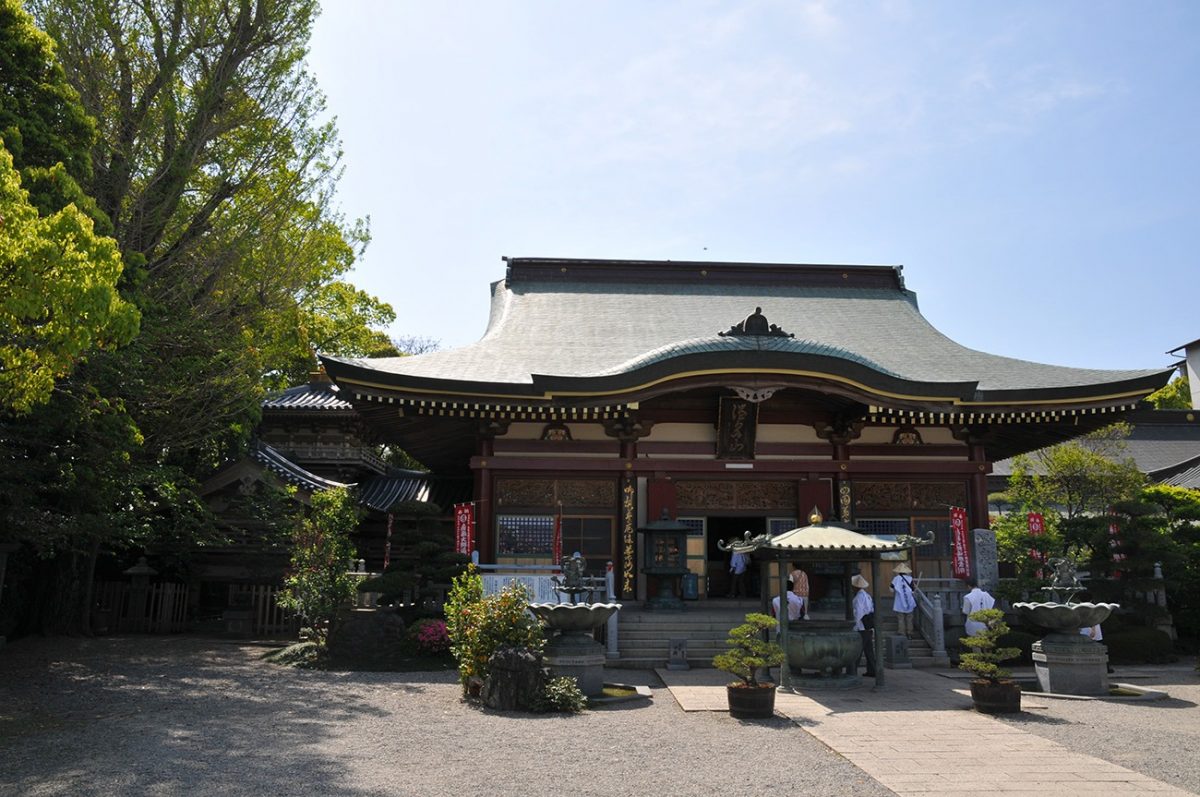
Anrakuji makes a particularly satisfying finish because it has been welcoming pilgrims for centuries and still operates a shukubō temple lodging. It is also associated with natural hot-spring water, making it an established overnight stop for people continuing around Shikoku.
If this is only a day walk, finish your temple visit and use local public transport connections around Higashihara and Itano to return towards Tokushima. Check the current timetable before starting because rural bus services shouldn’t be treated like city transport.
And if walking these six temples has made you wonder what happens next, that’s where things become interesting.
Temple 7, Jūrakuji, is only around 1.3 kilometres beyond Anrakuji, and the route through Temples 7, 8, 9 and 10 remains relatively accessible. Temple 10, Kirihataji, introduces a much more noticeable climb with its long flight of stone steps. The major transition, however, comes after Temple 11, Fujiidera, when the pilgrimage heads properly into the mountains towards Shōsanji, Temple 12.
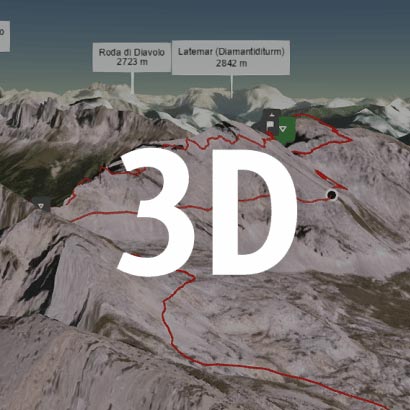
Walk this route yourself in 3D!
The video is a 3D walkthrough of this route; it’ll give you a great idea of what to expect before you set foot on the mountain.
I’ve created 3D videos of my walks and shared them with the Outdooractive and Welsh Man Walking communities.
hikoku 88 Temple Pilgrimage (Temples 1–6, Tokushima) – 3D Walkthrough
Places to Stay (Tokushima City / Naruto)
Tip: For Day 1–2 temple stages, base in Tokushima City (easy trains/buses) or Naruto (closer to Temple 1).
Tokushima City (great base for buses/trains)
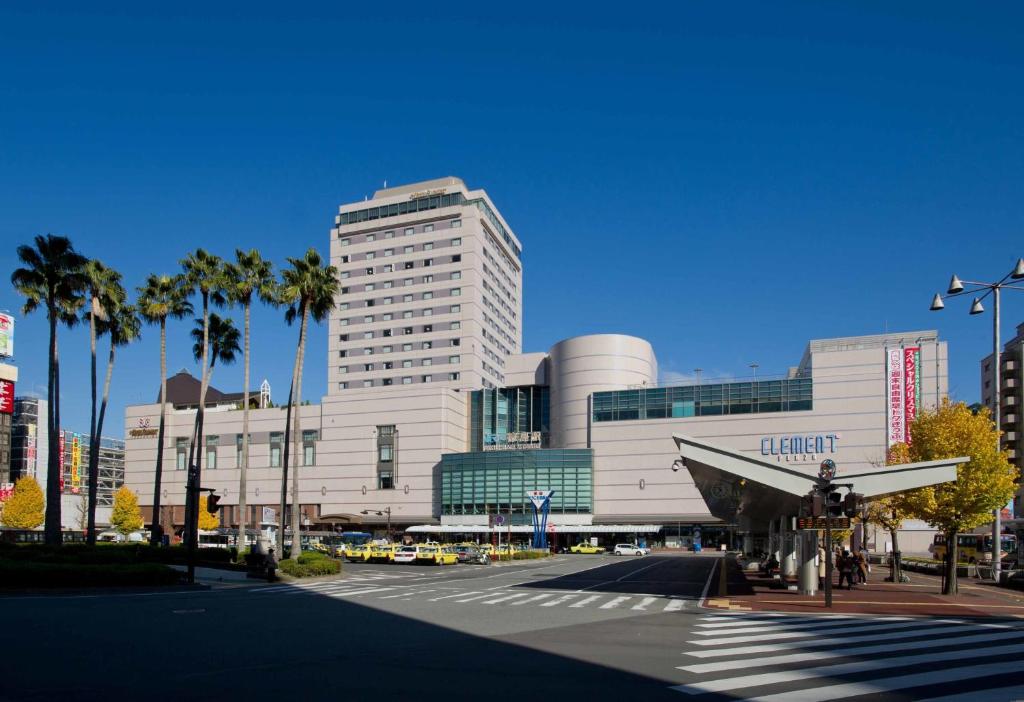
Right by the station; easy buses to Ryozen-ji; higher-floor rooms have city views.

Modern rooms, laundrette, quick walk to buses — handy for day stages.
Naruto (closest to Temple 1: Ryozen-ji)
Simple, reliable business hotel within reach of Ryozen-ji by local bus/taxi.
Seaside resort option if you fancy an onsen and views after your temple day.
For a wider choice of accommodation in the Tokushima, Booking.com has a huge variety to browse through.
Practicalities
- Start: Ryōzenji (Temple 1) in Naruto. JR Bandō Station is the most useful nearby railway station and is within walking distance of the temple.
- Finish: Anrakuji (Temple 6) in Kamiita. Local bus connections are available around the Higashihara area for onward travel towards Itano and the JR network. Check the current return timetable before starting your walk.
- Distance: Allow for approximately 15.8 km of walking between Temples 1 and 6, before any additional sightseeing or transport connections.
- Time: Moving time is around 4.5–5 hours, but allow 6–8 hours if you intend to properly visit each temple, worship, receive nōkyō stamps, eat and take photographs.
- Pilgrim equipment: Traditional white clothing, sugegasa hat and kongōzue staff are optional. Ryōzenji and shops close to Temple 1 sell pilgrim equipment if you want to use it.
- Nōkyōchō: The pilgrimage stamp book records worship at each temple. The traditional order is to visit the temple first and then receive the calligraphy and stamp rather than treating the nōkyō office as a stamp-collecting stop.
- Stamp cost: The current official guidance lists a nōkyōchō stamp at ¥500 per temple, so receiving stamps at all six temples costs ¥3,000, excluding the cost of the book itself.
- Temple etiquette: Bow at the temple gate and follow local signs. Pilgrims traditionally visit both the Main Hall and Daishi Hall. Photography may be restricted around sacred images and inside certain buildings.
- Food & water: This isn’t a remote section and you’ll pass communities, shops and vending machines, but carry water and snacks rather than relying on finding something exactly when you need it.
- Footwear: Comfortable trainers or lightweight walking shoes are sufficient in normal conditions. This section is predominantly paved and doesn’t require mountain footwear.
- Navigation: Henro markers appear throughout the route, but their forms vary and some can be easy to miss among suburban streets. Carry the GPX and an offline map as backup.
- Weather: Spring and autumn are the most comfortable seasons. Tokushima can be very hot and humid in summer, so carry additional water, sun protection and a lightweight waterproof.
- Osettai: You may encounter the Shikoku tradition of locals offering pilgrims food, drinks or other assistance. If offered, accept graciously where appropriate and thank the person; pilgrims carrying osamefuda may give one in return.
- Continuing: Temple 7 Jūrakuji is only around 1.3 km beyond Anrakuji. Temples 7–10 can be added to a longer itinerary, while the genuinely mountainous pilgrimage terrain begins later, particularly between Temples 11 and 12.
Below are 3 ideas for day tours and transfers around Tokushima and Naruto. GetYourGuide has more dates + browse here.
Shikoku 88 (Temples 1–6) FAQs
How far is the Shikoku pilgrimage walk from Temple 1 to Temple 6?
How difficult is the walk between Temples 1 and 6?
Do I have to walk all 88 temples to be considered a pilgrim?
Do I need to wear traditional Shikoku pilgrim clothing?
What is a nōkyōchō and how do the temple stamps work?
What should I do when I arrive at each temple?
Is the route between the temples easy to follow?
Can I find food, water and toilets along the route?
When is the best time to walk Temples 1–6 of the Shikoku pilgrimage?
How do I get to Temple 1 and return after finishing at Temple 6?

Water-to-Go Named Best Water Bottle for Travel. Click www.watertogo.eu + 20% Discount Using – ‘WMW20’

AllTrails: Trail Guides & Maps for Hiking, Camping, and Running | AllTrails ‘Plus’ 30% OFF – Read my ‘Full Review‘ for more details.