






Region: Lysefjord, Stavanger – Norway
Places To Stay: Stavanger is the closest city to Lysefjord, and is more than likely where you will fly into. You can stay in or near Stavanger, although you may want to base yourself in the rural areas on both sides of the fjord. Looking for more Norway trails? Head to my ‘Norway Hiking Guides‘ page to see all regions and routes.
Below are a few ideas for day tours and transfers around the Lysefjord, with GetYourGuide offering great discounts and easy booking + a huge amount of options in the Stavanger area, see more here.
For a wider choice of accommodation in Stavanger, Booking.com has a huge variety to browse through.
Hiking to Kjerag, the highest peak in the Lysefjord at 1,084 metres above sea level, takes you to the world-famous Kjeragbolten, otherwise known as the boulder. A massive boulder wedged in a crevasse 1,000 metres above the fjord.
We took the Ferry from Lauvvik to Lysebotn with our cars, then drove up to the car park at the start of the hike, which has a cafe. This hike is tough definitely not one for beginners or anyone with mobility issues. If you’re not used to steep climbs and scrambling over boulders, this one might be a challenge!
We did this hike in May 2024, right at the start of the season. There was still a lot of snow at the top, but the biggest disappointment was the thick fog that rolled in, wiping out all the views. We couldn’t see a thing! Still, we carried on and, in the end, made the right call to drive home rather than take the ferry back.
Getting There: Directions, GPX and Map
- Start/Finish: Staying in Stavanger, we hired cars and drove to Lauvvik to pick the Ferry up there. Ferry details can be found here. You can also drive all the way there. Off the ferry, drive up the mountain via a very steep and winding road, watch out for head on traffic as there isn’t a lot of room. The hike starts at Oygardsstol Kjerag Panoramic Restaurant.
- Transport: Seasonal buses are available from Stavanger, and a Ferry is available, but you will need your car to get to the start point. Parking available but can fill up in peak season.
- Download the GPX file here.
- Follow this route on my Outdooractive profile.
Travel Data: I use eSIMs to stay connected — quick setup and no roaming faff. Sim Local has been solid in Italy/Europe with good prices and coverage.

Hike Profile
- Distance: ~6m / 10km
- Duration: 5-6 hours (lots of sightseeing)
- Highest Point: 3520ft / 1072m
- Difficulty: Difficult (steep short climbs), lots of climbs where you need to use chains, large boulders to step up on and over, and can be slippery. The sheer vertical cliffs are scary and you need to be well prepared for all weathers.
Flying into Norway? Quick Skyscanner Checker
From Heathrow, we flew to Oslo then Stavanger, and hired cars, Skyscanner found the cheapest flights, try the flight widget above.
Hike Description
The hike starts at Oygardsstol Kjerag Panoramic Restaurant, at the top of one of the craziest roads I have ever been on, a succession of narrow hairpin bends, through a tunnel and into a fee-paying car park, which has excellent toilet facilities.
Before we set off a really friendly guide approached us and asked us to read the sign carefully, and advised us to follow the ‘red T marks’ painted on the stones. The red Ts are the path to follow, and sometimes can be a bit tricky to find, so take your time and also make sure you have packed for all weathers.
The hike starts with a steep 30-minute climb on bare rock up to a summit of 825 metres, from your start point at 680 metres. Very quickly, we were hiking up a wet and slippery steep granite wall with the aid of chain ropes attached to the mountain.


From this summit, you follow the mountain ridge before heading down to a small valley stream. We could see that there was another climb ahead, so we had a little break, and carried on praying that the fog would clear, but unfortunately it didn’t, but we were enjoying the challenges that this hike was bringing.


We got going again and started the second climb heading to the Kjerag, which will take you up to around 870 metres above sea level. We found this climb a bit tougher than the first, but we took our time and stayed together.


Once again at the top you make your way down to another shoulder with another stream running through, the rock is still slippery and you need to be very careful. We came across a rescue hut at the top, a really well-built place that I can imagine would be great to see if you ever got in trouble.


Then the final climb is ahead of you. This is the longest climb, again it’s very technical, with big step ups, a rope chain, and lots of bare rock. It’s a challenge, and again re-enforces what I said at the start, that you should only really take this walk on if you are happy with your physical condition.
Once at the top, you have a long walk across flat terrain, this is an easy walk to the Kjerag, and to the Kjeragbolten, you cross a crevice and the boulder viewing platform is signposted slightly down the rock a little.
Please be very careful around this area, you are not in any danger, but the sheer edges are quite unnerving and I think personally to step onto the boulder is taking a big risk. It seems no one has actually fallen off it, but I can assure you when you actually see where it is and the manoeuvre onto it, you will question whether it’s worth it or not.


The route I have uploaded here contains a different way back where you meet up with the route you took on the way up, just before the rescue hut. Because of snow we decided to go back the way we came up. This is difficult as this time you are using the chain ropes to make your way down, which I think is actually harder, so again we took our time, and stuck together.
A little disappointed because of the weather and finishing quite a bit earlier than expected, we decided not to wait for the ferry but to drive home instead, and this was a brilliant decision. Further down the mountain the fog cleared and we got to see what we had missed, the terrain is absolutely beautiful, the green and the rocks really stand out, and the streams and waterfalls were amazing.

Places to Stay in and near Stavanger
For a wider choice of accommodation in Stavanger, Booking.com has a huge variety to browse through.
Recommended Stays

Home Again Apartments Nygata 1
Home Again Apartments Nygata 1 in Stavanger is housed in a historic building, offering a unique and charming environment. Located 12 km from Stavanger Airport, the property is a short walk from Stavanger Maritime Museum and City Hall. Nearby attractions include Godalen Beach and Stavanger Art Museum.

This modern hotel is centrally located in Stavanger, just 5 minutes’ walk from Stavanger Station. WiFi and access to a well-equipped fitness room are free for guests.

AllTrails: Trail Guides & Maps for Hiking, Camping, and Running | AllTrails ‘Plus’ 30% OFF – Read my ‘Full Review‘ for more details.
Practicalities
- Parking: The walk starts from Øygardstøl car park above the Lysefjord. It’s a large, well-organised paid car park with toilets and a small café during the main season. In summer it fills up quickly — especially on good weather days — so aim to get there early. If you’re driving from Stavanger, allow plenty of time as the road up is steep and winding.
- Distance & Time: Roughly 11km return. For most people, allow 5–7 hours depending on pace, queues at the chains, and how long you spend at the boulder itself. It’s not a long walk on paper, but it’s demanding.
- Terrain: This is not a gentle fjord stroll. You’ll face three major climbs, lots of smooth granite slabs, rocky sections and fixed chains to help on steep ascents and descents. In wet conditions, the rock becomes extremely slippery. Good grip footwear is absolutely essential.
- Difficulty: Strenuous. The elevation gain is around 550–600m, and it’s constant up-and-down rather than one steady climb. You need decent fitness and confidence on steep terrain. Not suitable for anyone with a serious fear of heights.
- Season: Typically accessible June to September depending on snow conditions. Outside of summer, snow and ice can make this route dangerous without proper winter gear and experience. Always check local conditions before setting off.
- What to Wear: Proper hiking boots or sturdy trail shoes with strong grip
- Waterproof jacket (weather changes quickly in the fjords)
- Layers — it can be warm climbing but cold and windy near the cliff edge
- Gloves can help on the chains if it’s cold
- Water & Food: There are no shops once you leave the car park. Bring plenty of water and snacks. It’s a long outing and the constant climbing burns energy quickly.
- Safety: The chains are there for a reason — use them. Take your time on steep descents. If it’s wet or windy, slow everything down. And remember: you absolutely do not have to stand on the boulder to complete the hike. The view is spectacular whether you step on it or not.
- Toilets: Available at the car park. None on the trail.
- Mobile Signal: Patchy. Don’t rely on it for navigation.
Kjeragbolten FAQs
Is Kjeragbolten safe?
How long does the Kjeragbolten hike take?
How difficult is the Kjeragbolten hike?
Can beginners hike to Kjeragbolten?
Do you need a guide?
Is there an entry fee?
What is the best time to visit?
Is it scarier than Preikestolen?
Can you hike Kjeragbolten in winter?
Is it worth it if you don’t step on the rock?
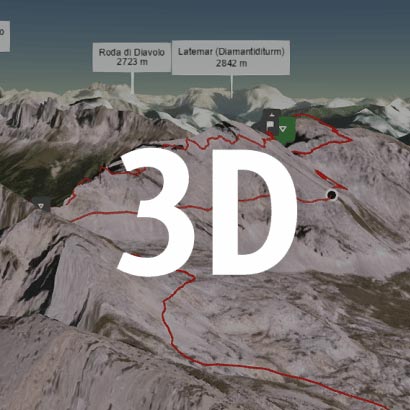
Walk this route yourself in 3D!
The video is a 3D walkthrough of this route; it’ll give you a great idea of what to expect before you set foot on the mountain.
I’ve created 3D videos of my walks and shared them with the Outdooractive and Welsh Man Walking communities.
Hike to Kjerag to see the world-famous boulder Kjeragbolten in the Lysefjord – 3D Video

Water-to-Go Named Best Water Bottle for Travel. Click www.watertogo.eu + 20% Discount Using – ‘WMW20’